

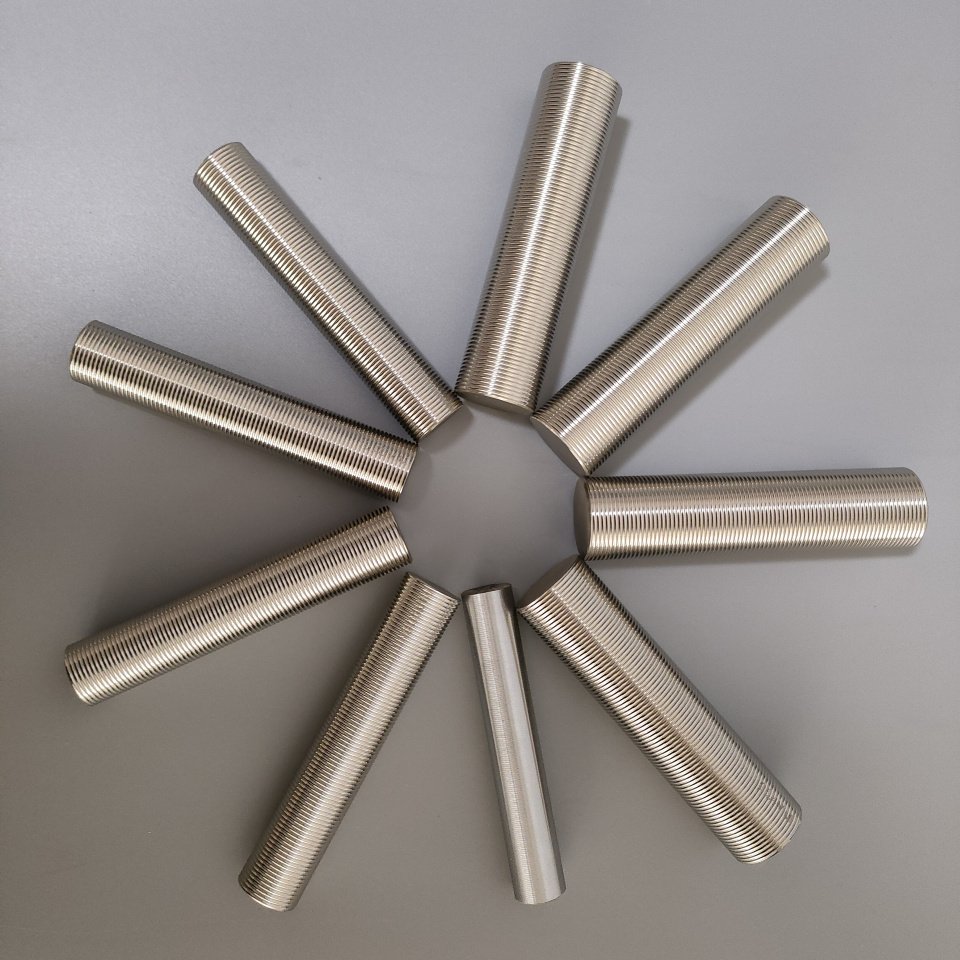
The history of coating rods dates back to the early 20th century. In 1905, Charles W. Mayer established Mayer & Cie and developed the original balancing rod, also known as the squeegee rod — recognized as the prototype of modern precision metering rods.
Early metering rods were mainly produced by winding music wire onto a carbon steel mandrel, and were widely applied in the production of carbon paper and wax paper.
With the advancement of industrial technology, stainless steel has gradually replaced carbon steel as the preferred mandrel material for modern metering rods, effectively improving durability and solving rusting problems. Advanced surface treatments such as chrome plating have also been widely adopted.
In terms of manufacturing technology, cold extrusion process emerged in the late 20th century as an alternative to traditional wire winding methods. This innovative technique forms continuous corrugated grooves directly on the stainless steel rod body, eliminating common drawbacks of wire-wound rods such as wire breakage and loose winding. It greatly upgrades the overall precision and service life of industrial metering rods.